

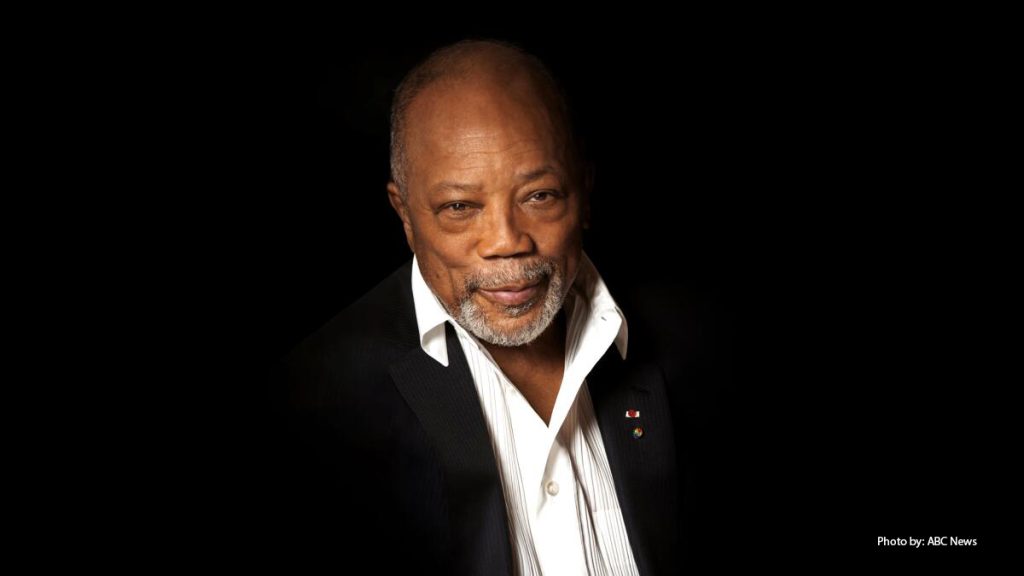
In the world of modern music, few figures have shaped as many genres, artists, and cultural moments as Quincy Jones.
Producer, arranger, composer, and cultural strategist, Jones built a career that extended far beyond the traditional role of a music producer. Across more than six decades, his work helped define the sound of jazz, pop, film, and television while influencing generations of musicians and producers.
To understand Quincy Jones is not simply to study a producer.
It is to study the mind of a musical architect.
Early Foundations
Jones’ journey into music began long before he entered the recording studio.
Growing up in Chicago and later Seattle, he developed an early fascination with sound, rhythm, and orchestration. As a young musician, he began playing trumpet and quickly immersed himself in the discipline of jazz performance.
One of his earliest professional opportunities came when he joined the band of Lionel Hampton.
The experience exposed Jones to the complex structure of big-band music and the art of arranging for large ensembles, skills that would later become central to his career.
It was here that Jones began to understand music not just as performance, but as construction.
The Arranger’s Mind
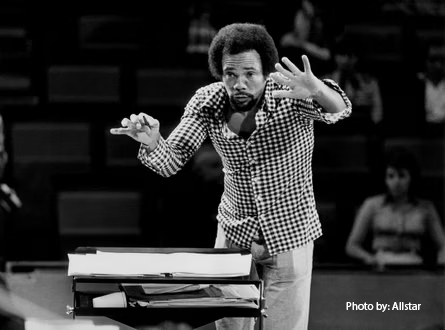
Before he became a legendary producer, Jones established himself as one of the most respected arrangers in American music.
His arrangements balanced technical sophistication with emotional clarity, allowing orchestras and bands to move seamlessly between jazz, soul, and popular music.
This ability allowed him to collaborate with artists such as Frank Sinatra and Ray Charles, whose recordings benefited from Jones’ understanding of musical structure.
For Jones, arrangement was not merely decoration.
It was architecture.
Each instrument had a purpose, each musical line a place within the larger design.
The Michael Jackson Collaboration
Perhaps the most widely recognized chapter of Jones’ career emerged through his collaboration with Michael Jackson.
Together they created three albums that reshaped modern pop music:
Off the Wall (1979)
Thriller (1982)
Bad (1987)
These recordings blended pop, funk, rock, soul, and orchestral elements into a unified sound that resonated across cultures and continents.
Thriller would go on to become the best-selling album in music history.
Behind its success was Jones’ remarkable ability to assemble extraordinary musicians, refine performances, and shape the sonic landscape of each track.
In Jones’ hands, the recording studio became a place where music was engineered with precision and imagination.
Music Beyond the Studio
Jones’ influence was never limited to records alone.
He composed scores for film and television, including the groundbreaking television miniseries Roots, which helped bring powerful historical storytelling to audiences across the United States.
He also worked as a producer and executive, helping launch projects that expanded the visibility of Black artists and creative voices within the entertainment industry.
In every role, Jones demonstrated the same instinct: the ability to see how music could move beyond the studio and shape culture itself.
A Global Musical Vision
What distinguished Quincy Jones from many of his contemporaries was his refusal to remain confined within a single genre.
He viewed music as a global language.
Throughout his career, Jones brought together musicians from different traditions, styles, and backgrounds, creating recordings that reflected a wider musical world.
Jazz harmonies could coexist with pop melodies.
Orchestral arrangements could sit beside funk rhythms.
For Jones, boundaries between genres were obstacles waiting to be removed.
Legacy
The influence of Quincy Jones extends across decades of music history.
His work helped redefine what a producer could be, not simply a technician guiding a recording session, but a creative leader capable of shaping the artistic direction of entire projects.
Jones demonstrated that great records emerge from collaboration, vision, and discipline.
Behind every arrangement, every recording session, and every production decision was a mind constantly searching for balance between musical structure and emotional expression.
Inside that mind was a simple but powerful idea:
Music, when constructed with care and imagination, has the power to move the world.