

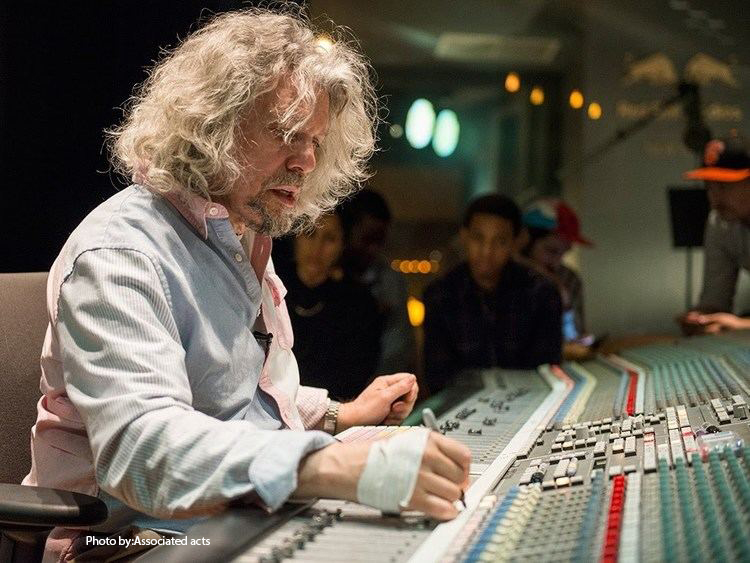
In the evolution of recorded music, certain engineers quietly shape the sound of entire eras. Their names rarely appear on stage, yet their work lives inside the sonic architecture of the recordings themselves.
One of those engineers is Bob Power.
During the late 1980s and 1990s—when hip-hop was rapidly transforming from a street movement into a global cultural force—Power helped redefine what the genre could sound like inside a professional recording studio.
His contribution was not merely technical.
It was philosophical.
When Hip-Hop Entered the Studio
In hip-hop’s earliest years, production was largely shaped by samplers, drum machines, and raw energy. Many records were created quickly, often with limited studio resources.
But as the genre matured, a new question emerged:
What would hip-hop sound like if it were recorded with the same precision and care as jazz, soul, or classical music?
Bob Power became one of the engineers who answered that question.
Working closely with artists who were pushing the boundaries of hip-hop’s musical language, Power helped bring a new level of clarity and depth to the genre’s recordings.
A Tribe Called Quest and the Sound of the 1990s
One of Power’s most influential collaborations was with A Tribe Called Quest.
The group’s music blended jazz samples, live instrumentation, and thoughtful lyricism—elements that demanded careful sonic balance. Power’s engineering helped translate those complex textures into mixes that felt warm, spacious, and musical.
Instead of allowing samples and drums to compete for space, his mixes created room for every element to breathe.
The result was a sound that felt both relaxed and precise—one that would influence hip-hop production for decades.
Engineering as Musical Craft
What distinguished Bob Power was not simply his technical skill but his musical awareness.
Power approached engineering as a form of listening.
Rather than relying heavily on processing or corrective techniques, he focused on capturing performances accurately from the beginning—through careful microphone placement, balanced recording levels, and thoughtful arrangement of sonic space.
In this sense, the engineer’s role became less about fixing sound and more about revealing it.
The recording studio became a place where music could unfold naturally rather than be forced into shape through excessive manipulation.
Expanding the Sonic Language of Hip-Hop
Power’s work helped demonstrate that hip-hop could achieve the same sonic richness as any other genre.
Albums engineered with his touch revealed new possibilities for how beats, samples, and live instruments could coexist within a mix.
This approach influenced not only hip-hop but the broader world of modern production, where genres increasingly blended and boundaries began to dissolve.
The studio had become an instrument.
And the engineer, its performer.
Teaching the Next Generation
Beyond his work in the studio, Bob Power also dedicated a significant part of his career to education.
As a faculty member at Berklee College of Music, he helped guide a new generation of audio engineers and producers, emphasizing that great recordings begin with careful listening rather than complex technology.
Power often reminded students that microphones, consoles, and software are only tools. The true craft of engineering lies in understanding the emotional space of a performance and knowing how to preserve it.
Through teaching, he ensured that the knowledge behind great recordings would continue long after the sessions themselves had ended.
Legacy
The influence of Bob Power can be heard across decades of music production. From the warmth and balance of classic hip-hop recordings to the students he mentored in the classroom, his work helped shape how modern music is recorded and understood.
In the studio, Power approached engineering not as a purely technical role but as a form of musical listening. His mixes created space for rhythm, harmony, and voice to coexist naturally, allowing the emotional character of a performance to remain intact.
Beyond the control room, his commitment to education ensured that the knowledge behind those recordings would continue long after the sessions ended. Through his teaching at Berklee College of Music, he helped guide a generation of engineers and producers who would carry those principles into their own work.
Bob Power passed away on March 1, 2026, leaving behind a body of work that extends far beyond the albums he engineered. His legacy lives in the sound of the records he helped create and in the countless engineers and musicians who learned from his philosophy of careful listening and respect for the craft.
In the architecture of modern recording, Bob Power was not simply operating the machinery.
He was helping design the sound of an era.