


Some recording studios are simply places where music is made. Others become environments where the very language of recorded sound evolves.
Few spaces illustrate this transformation more clearly than Abbey Road Studios.
Located in North London, Abbey Road is not merely one of the most famous recording studios in the world—it is one of the most influential sonic laboratories in modern music history. Within its walls, engineers and artists reshaped how music could be recorded, layered, and experienced.
To understand Abbey Road is to understand the architecture of recorded sound itself.
The Birth of a Recording Institution
Originally opened in 1931 by EMI, Abbey Road Studios began as a facility primarily dedicated to classical recordings. The early focus of the studio reflected the technological ambitions of the era: capturing orchestras and ensembles with unprecedented clarity.
The building’s design played a crucial role. Large recording rooms with carefully engineered acoustics allowed orchestras to perform naturally while microphones translated the performance into recordings.
Long before multi-track production defined popular music, Abbey Road engineers were already refining the relationship between room acoustics, microphone placement, and recording technology.
This foundation would become essential decades later.

Technology Meets Imagination
Abbey Road also became a testing ground for recording technologies that would later become industry standards.
Advances in:
multi-track recording
tape editing
artificial double tracking (ADT)
stereo imaging
all emerged from the experimentation happening within its control rooms.
These developments fundamentally changed how musicians approached composition. Songs could now be layered, rearranged, and sculpted after the performance itself.
The studio was no longer simply a space for capturing music.
It became a space for inventing it.
Cultural Influence Beyond the Studio
Abbey Road’s impact extended far beyond London.
Artists from around the world traveled there to record, drawn not only by its equipment but by the culture of experimentation that had grown around it.
Over the decades, the studio hosted sessions by:
Pink Floyd
Radiohead
U2
Each generation of musicians inherited the studio’s legacy of sonic exploration.
Abbey Road had become more than a facility.
It had become a symbol of creative possibility.
The Studio as Cultural Architecture
What makes Abbey Road remarkable is not simply its history of famous recordings. It is the way the studio reshaped how music is conceived and constructed.
Recording spaces are rarely neutral environments. The design of a room influences the sound captured within it. The technology available to artists influences the creative choices they make.
Abbey Road demonstrates how a recording studio can function as cultural architecture—a structure that shapes artistic expression over decades.
Within its walls, engineers, musicians, and producers redefined the boundaries of recorded music.
Legacy
Today, Abbey Road remains one of the most respected recording studios in the world. Its equipment has evolved, its technology has modernized, but its role as a center of sonic innovation remains unchanged.
The studio stands as a reminder that music history is not written only by performers.
It is also written by rooms.
Rooms where sound is captured, shaped, and transformed into something that travels far beyond the moment of performance.
And few rooms have shaped modern music more profoundly than Abbey Road.
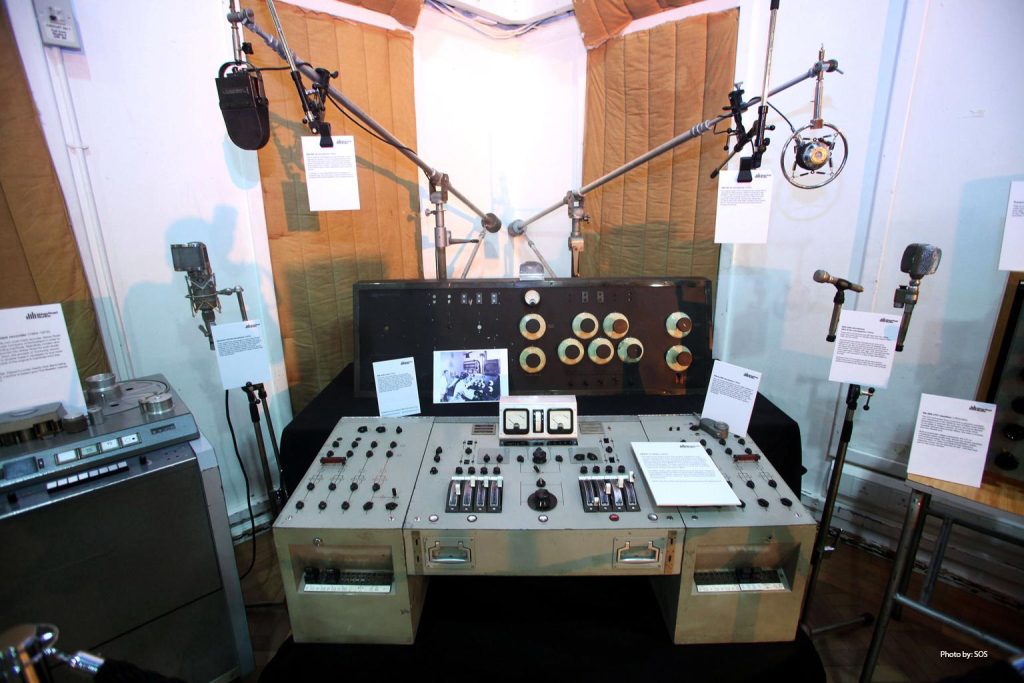
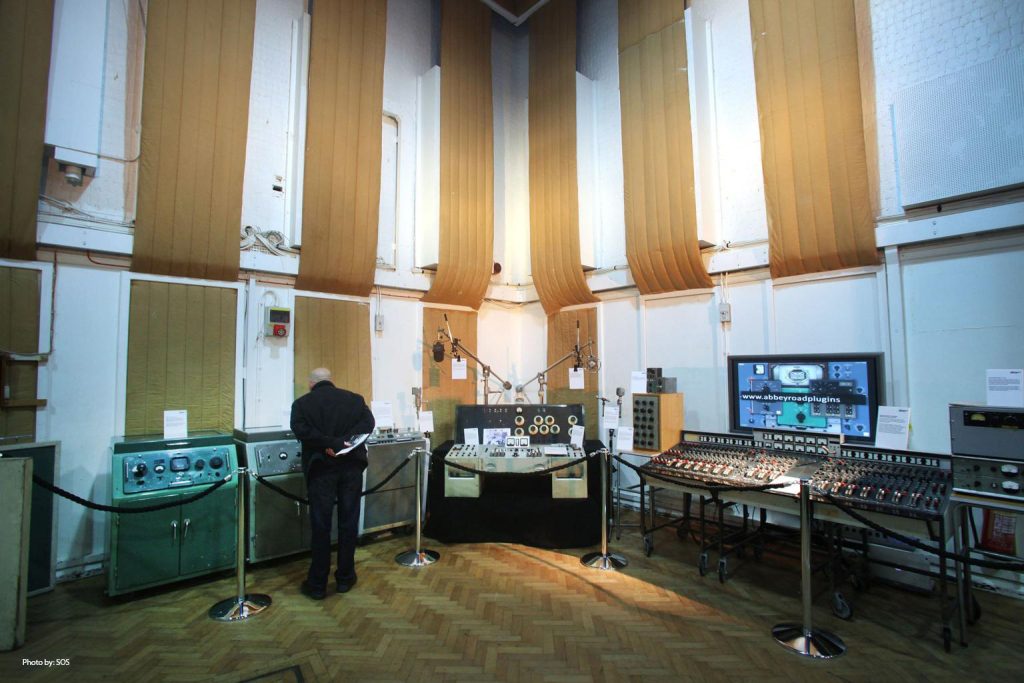
Studio Two: The Engine of Modern Recording
If Abbey Road has a heart, it is Studio Two.
This room—tall, open, and acoustically distinctive—became the birthplace of some of the most influential recordings in popular music. It was here that artists and engineers began pushing beyond the limitations of traditional recording techniques.
The most famous of those artists were The Beatles.
Working closely with producer George Martin and EMI engineers, the band transformed Studio Two into an experimental environment. Tape loops, unconventional microphone placements, orchestral layering, and early electronic effects became tools for redefining what a studio could do.
Music was no longer simply documented.
It was constructed.
Engineering as Creative Practice
One of Abbey Road’s lasting contributions to music lies in the elevation of the recording engineer.
In earlier decades, engineers were primarily technicians responsible for ensuring that equipment functioned properly. At Abbey Road, that role evolved into something far more creative.
Engineers began shaping tone, depth, and spatial perception within recordings. Decisions about microphone placement, tape manipulation, and signal processing became artistic choices rather than purely technical ones.
The studio itself became an instrument.
Every wall, console, and microphone contributed to the final sonic architecture of a recording.